
St Margaret's Chapel
and the Magdalene Hospital / Almshouses
also known as the Magdalene Chapel
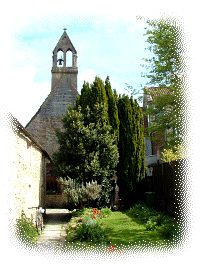
St Margaret's Chapel is a very special little chapel off Magdalene Street - part of a former medieval complex outside the Abbey, which served as a hospital and almshouses for the poor.
It is nowadays a revered place for less conventional Christians and for followers of the Magdalene as an aspect of the Goddess. It and its garden have a peaceful atmosphere of sanctity.
It is thought that the chapel was funded by St Margaret of Scotland - she was reknowned for paying for chapels to be built up and down the country. The Almshouses however were originally the Magdalene Hospital and later were converted into almshouses.
Foundation
The Hospital of St Mary Magdalene may have been founded as early as 1264. It was founded "of the gift and foundation of the Abbots of Glastonbury" to house ten poor men before 1322, and was known as the Royal Hospital after the dissolution of the monastery in the 1520s. The poor were financed by grants from the Crown by a reserve on rents called the King's Audit.
The Hall
The open roofed hall had a central passageway and wooden cubicles on each side. The chapel is off-centre. This may be because the hall was replaced by a narrower one or that the chapel was built first and the hall plans changed after.
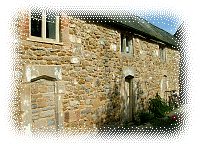
After the dissolution, the roof of the hall was removed, and two rows of almshouses were built with upper and lower rooms. A dining room was situated at the chapel end with part converted into an eleventh house. The Chapel, the eastern wall and gable and the lower part of the western gable survive today.
Alms
Residents were given 7 pence a week which rose to 9 pence as a result of a gift of rent charge of £6.2s.6d on the Crown Inn. Half a crown (2 shillings and six pence or 25 pence today) was kept for wine for the trustees if they attended the feast day of the Annunciation or the Feast of Michael the Archangel, when allowances were paid to the poor. The incumbent of Glastonbury had an allowance to perform services in the Chapel.
Nineteenth Century
By 1817 the houses were described as dilapidated and could not be made fit to serve as dwellings for 'decent persons'. They were also too close to each other for maintaining cleanliness and health. There were eleven residents - the eleventh was known as the 'Hall Pensioner' as he received no pay but lived in the former hall and succeeded to the next vacancy on the pay list.
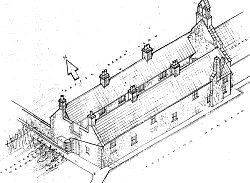
In the early 19th Century the eleven houses were converted into five dwellings plus a wash house. In 1958 they were derelict and one row of the houses was demolished. Some Glastonbury residents can still recall when local men lived in the almshouses up to the 1950s.
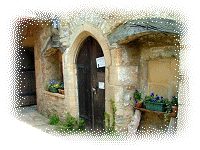
The other row and the Chapel were repaired and exist as you see them today.
The Chapel
The Chapel has features dating to the 1200s and 1400s, although the lancet window in the chapel may have an earlier date. The present buildings were begun in 1400s and by 1610 were described as 'ancient'.
The Chapel was again restored in 1968. It was served from St Benedict's (formerly Benignus) church, Glastonbury.
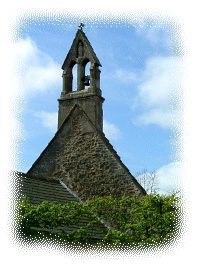
St Margaret is depicted in the bellcote. This may indicate that the hospital was formerly for sick women rather than men. The Chapel is named after her.

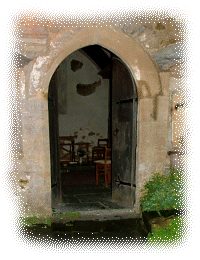
Let yourself sit quietly in the chapel, a place of contemplation and prayer. It is a wonderful place to visit if you need to calm down and collect yourself in a supportive, feminine spiritual atmosphere.
Visiting the Chapel
Access is generally from 10.00 - 18.00 every day of the year, including Christmas Day. Closing times vary in summer, extending when there is a need. If visitors wish to talk about the site, they should visit around noon, since somebody is always there then. On Tuesdays, 7-9pm, there is a shared silence, open to all. Sufis hold their meditations at the chapel on Sundays from 6pm, again open to all.
The chapel has for some years been run by the Quest Community, who are free-thinking Anglican Christians. The chapel has no minister and they encourage anyone of any faith or none to visit and use the space. It is for people to use for their own kinds of prayer or meditation. The Community uses the chapel at noon, Monday to Friday and most Saturdays, for their own prayer practice.
Quest is now closing and, instead, a Friends of St Margaret's Chapel group is being formed. The official body responsible for the chapel is St Benedict's PCC but the Friends will do the day to day work on their behalf. Before long the Friends will launch a website, and they appreciate public support in maintaining and restoring the chapel and almshouses - details coming soon.